How to hang curtains in a short-term rental: high, wide and just touching the floor
Curtains show up in nearly every listing photo, and a short, crooked or wrinkled panel can make a well-designed rental look unfinished. This guide translates a professional install standard into a simple system for hosts doing it themselves, covering rod height and width, panel count, and how to cut and steam curtains so every window is photo-ready.
High, wide, and just touching the floor
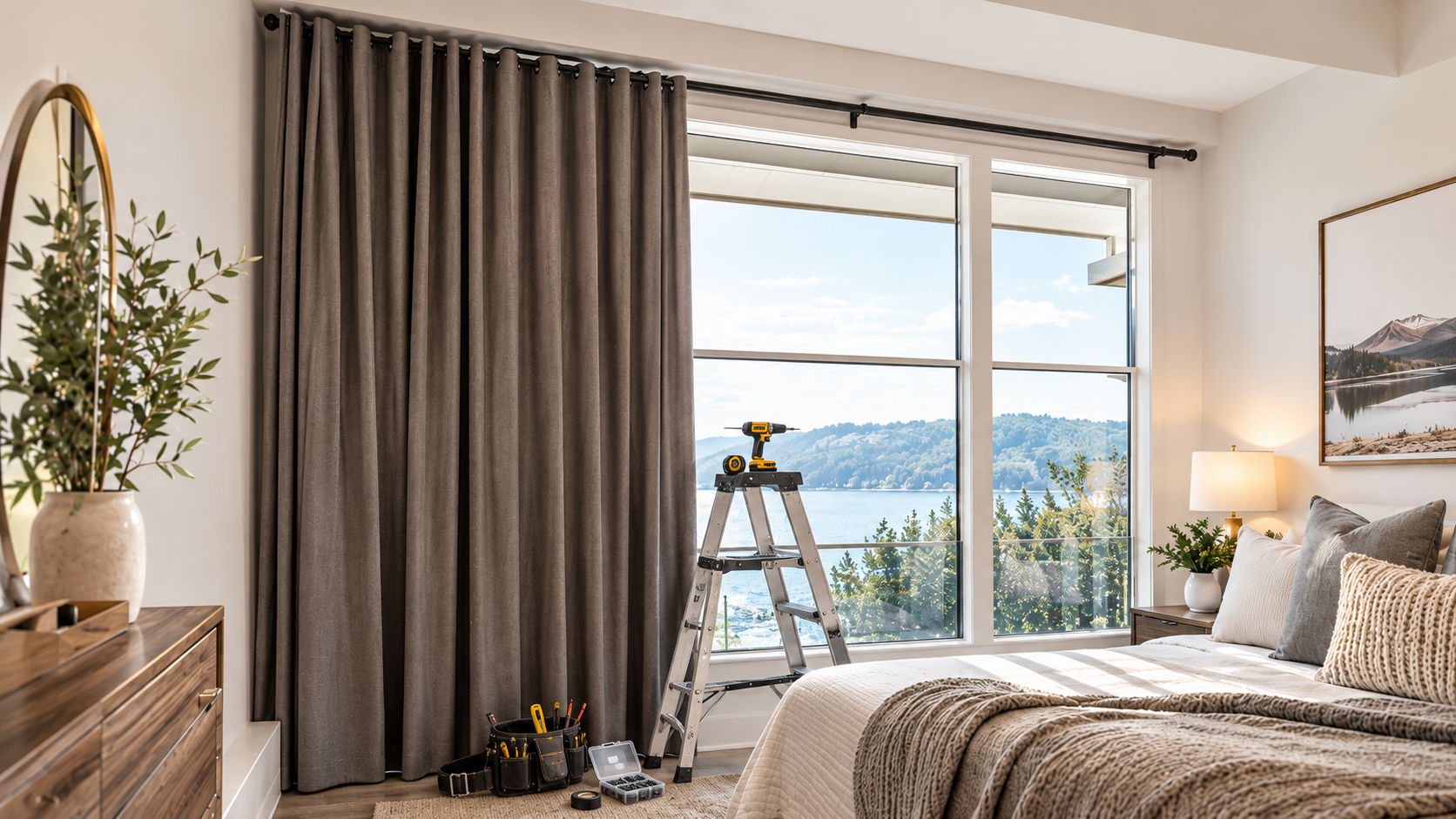
Hang the rod as close to the ceiling as you can, run it wider than the window, and let the panels kiss the floor with a ½" to 1½" break. That's the whole system. Everything below is how to hit those three marks.
Curtains matter more than they get credit for, and picking the best curtain rods to match them is equally as important. They're in almost every room photo, they're what guests pull at 6am when the sun hits the bed, and a short, crooked or wrinkled panel makes a well-designed room look unfinished. The numbers here come from a professional install standard written for operator crews, translated for hosts doing it themselves.
How wide should a curtain rod be?
Extend the rod 12" past the window frame on each side, when the wall allows. A rod that stops at the frame leaves the panels covering glass even when they're open. Run it wider so the panels stack on the wall and the whole window shows.
- Room to spare? If you have 12" or more of wall on each side, extend the rod 12" past the inside edge of the frame on both sides.
- Tight on one side? Use whatever space the short side has, and match it on the other side. Equal on both sides beats wide on one.
- Window over 6' wide? Add a center bracket so the rod doesn't sag.
One rule never bends: the rod extends the same distance past the frame on both sides.
How many curtain panels do you need?
Measure the full rod, end to end, then check the width of a single panel on the package. The answer is almost always two panels or four.
Split them evenly, half on each side. Too few panels on a long rod and they stretch flat across the window, which reads cheap in person and worse in photos. Buying an extra pair is better than stretching two.
How high should you hang curtains, and how long should they be?
Mount the rod and brackets as close to the ceiling as you can. The panels should fall the full height to the floor and rest on it with a ½" to 1½" break.
Less than ½" and they look like they shrank in the wash. More than 1½" and they pool, collect dust and catch the vacuum. Panels also need to hang straight and the same width on both sides.
Measure from the bottom of the rod rings to the floor, then add your break. That's your cut length.
How do you shorten curtains without sewing?
Store-bought panels rarely fit a ceiling-height mount. You'll be cutting most of them, and the masking-tape method keeps the edge clean without a sewing machine.
- Get the wrinkles out first (more on that in the next section). A wrinkled panel will measure short.
- Lay the panel face down on a clean, flat surface.
- Measure your cut length on the back side, and mark it at several evenly spaced points across the panel.
- Run ½" masking tape across the panel, centered on your marks.
- Cut straight through the middle of the tape.
- Leave the tape on and hang the panel. The tape holds the cut edge so it won't fray, and it's hidden at the floor.
Cut one, hang it, check the break, then cut the rest to match.
How do you get wrinkles out of curtains?
We'd keep a steamer in your install kit. It's the one method here that doesn't depend on drying time or humidity.
Without one, what works depends on your climate and the fabric. Operator crews in different markets swear by different methods:
- Mist with a garden sprayer and hang to dry
- Spray with warm water and a wrinkle-release product
- Mist lightly, run through the dryer briefly, and pull the panels out right away
Whatever you use, get the fold lines out before you measure, cut or hang. Package creases are one of the first things a photographer's lighting finds.
Six ways curtains go wrong
If you see one of these, fix it now:
- Angled: the rod isn't level.
- Uneven: the rod sticks out farther on one side.
- Too low: the rod sits just above the window instead of near the ceiling.
- Too short: the panels stop above the floor. \
- Too long: the panels pool more than 1½".
- Too thin: the panels are stretched flat across a long rod.
Tag-and-sticker check while you're there: pull every label off the panels, sometimes they are hard to find and you don't want your guests, or your photographers, to be the first ones to see them.
FAQ
How high should curtains be hung?
As close to the ceiling as you can mount the rod and brackets, with the panels falling all the way to the floor.
Should curtains touch the floor?
Yes. Let them rest on the floor with a ½" to 1½" break. Less looks too short. More pools and collects dust.
How far past the window should a curtain rod go?
12" past the window frame on each side when the wall allows. If one side is tight, match the shorter side on both.
How many curtain panels per window?
Usually two or four. With panels under 52" wide, use two on rods up to 48" and four on longer rods.
Do you need a center bracket on a curtain rod?
Yes, for any window over 6' wide, so the rod doesn't sag.
Should Airbnb curtains be blackout?
The professional standard uses blackout panels. Guests sleep in different time zones and schedules, and blackout panels block early sun.